Blog Site

Monday, December 4, 2006

TWO YEARS OF BLOGGING!

With the passing of this November, the two-year mark has been reached for this blog. As an anniversary special, I've decided to look over all my previous posts, and list the 'Top 20 Posts' from the past two years (or, ever, in other words). These are posts that I thought were either the most interesting, the most important, or represented some of the more significant notions I've considered or learned about over this time.

There were several other posts that I was sad to weed out of this list, but didn't quite make the cut. These can still be read by seeing the archives, of course. In addition, much of the significant work I've done over the past two years can be found as articles at my Philosophy Site, and were never blog posts, so they aren't present here.

Many thanks to all my readers and please spread the word to your friends about this site, so that we may continue on! :)

DT STRAIN PHILOSOPHY BLOG
TOP 20 POSTS FROM 2005 & 2006
(in order of posting)

Summary of the Primary Virtues
Virtual Virtue: Your Online Self

The Nature of the “Force”

Life & Death Are Not Opposites

The Big Deal About Complexity

Cultural Conceptions of “Life”

Good for the Individual & Society the Same

Forgiveness Is A Gift To Ourselves

Terrel Pough & Being Good

ISO The Real Buddha & Jesus

Philosophy or Religion?

Exploring Meditation

Denver on Nature & Life

Revulsion at the Natural Brain

The Minions of Hitler

Consciousness Around Us?

The Puzzle of Our Time

Notes on “Christianity Without God”

Threads on Violence

Dehumanization: A How-To

Friday, December 1, 2006

The R-word

I would like to make a plea to all philosophers, theologians, and others who would write formally on the topic of religion. But first some background...

Last Sunday my wife and I attended a presentation by Reverend Robert Tucker at a service of the Unitarian Fellowship of Houston. The presentation was, "A New Debate of Religions: Atheism and Belief". His presentation was a criticism of recent atheist authors such as Sam Harris and Richard Dawkins. However it was his juxtaposition of religion and science that got me wondering about the use of the word 'religion'. Certainly, his use of the word was very different from Harris' use of it.

Then I thought about Buddhism. Some say it is a religion and some say it is a philosophy (or both). In another example, we have things like Humanism, which people also debate about as being a religion, or an alternative to religion. Even within the fundamentalist evangelical Christian movement, you have some Christians actually saying they 'aren't religious' - that it's "not about religion but about a personal relationship with Jesus Christ". My wife pointed out that when a person says they are a Christian, we really don't know much about what that even means. They could be a Jeffersonian deist, to a follower of the historic Jesus' teachings, to a liberal traditional Christian, to a fundamentalist evangelical biblical literalist, or anything in between.

More importantly, are the differences of meaning when it comes to serious formal articles and arguments on 'religion'. In some cases, the author may be speaking of a bundle of practices, traditions, and rituals - blurring the line with culture. In other cases 'religion' may mean a community of people. Then there is the 'religion' which refers to a body of beliefs, scriptures, myths, and dogma.

When Sam Harris criticizes religion, he is criticizing things like supernatural beliefs based on no evidence, dogmatism, violence, and so on. When asked, "what about Stalin?" he responds that what he's really talking about is more broad, and that what Stalin was practicing was a 'secular religion' just as steeped in the problems he is attacking as traditional religions are. When someone asks him about his support of certain Buddhist practices, he says that Buddhism isn't really a 'religion' in the same sense.

But consider people like Siddhartha Gautama (the Buddha) himself. As I have often mentioned, when he was asked about souls and the afterlife and such, he specifically said he had not elucidated on such things. And he said the reason he had not done so was because these things were not relevant to religion. The Buddha seems to have a completely opposite view of religion to Harris. To him, all of that stuff about superstition, dogmatism, and mythology is not religion, but rather true religion are those things which help us experience happiness and contentment in this life.

This is a similar view to that found in a quote often spuriously attributed to Einstein, "The religion of the future will be a cosmic religion. The religion which is based on experience, which refuses dogmatism. If there's any religion that would cope the scientific needs it will be Buddhism."

So here is my plea...

I would move that scholars, academics, theologians, philosophers, and anyone else involved in formal writing on these matters cease using the word 'religion' altogether. I would have it officially declared a nonsensical word with no formal value.

This would be similar to what has happened with the word "race" in formal biology circles. Race is no longer considered a real concept in biology. It's simply a cultural label applied to certain groups who have shared traits. According to biological science, if we took all the left handed people in the world and considered them "the race of left handed people", this would be as biologically irrelevant as "the race of dark skinned people" is.

Likewise, formal writers on matters of human spirituality should henceforth consider the word "religion" a layman's informal word - a cultural label with no concrete meaning of purpose in serious work.

If this practice were adopted, it would have several effects:

Firstly, we would have to develop a new vocabulary with formal functionality to it. As you can see above, I wasn't even able to write this article without paradoxically using the word 'religion' myself, so that you'd know what I was generally talking about. We have to find new ways of discussing these concepts that are more precise and meaningful.

The second effect of discarding the R-word is what I really like about the idea. That is that when people like Sam Harris and Reverend Tucker converse, it would force them to get on the same page. Instead of saying that religion is harmful, Harris would have to say that superstition is harmful. Instead of saying that religion helps people, Tucker would have to say that fellowship helps people.

I think we could get much further in debates and discussions if we stop relying on such a blunt term, and start focusing on the individual practices, beliefs, traditions, behaviors, and structures. In this way, we could carry on meaningful dialog without being distracted by the war on the side over what religion is or isn't. If we do this, it seems likely that we will be able to save a lot of time and see that we really agree on much more than we think we do.

I seriously doubt the term is actually going to be abandoned, but at least by thinking of the issues I've raised, it's my hope some people may not be so sidetracked by what is, in the end, a word that's more trouble than its worth.


Dinner & Religion

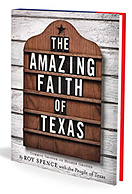
An interesting multifaith group has formed in Houston to gather and discuss religious issues over dinner. It is sponsored by the City of Houston, The Boniuk Center for Religious Tolerance at Rice University, and Interfaith Ministries for Greater Houston. The project seems to be inspired by a book called The Amazing Faiths of Texas by Roy Spence. The website for these dinners is http://amazingfaithshouston.org. I and a friend in my Humanist group have signed up for a dinner around January 20th. I guess we'll see what happens and report back after.

Saturday, November 25, 2006

Sci-Fi Takes Its Next Step After 'The Matrix'

This week I saw The Fountain. While I'm not surprised to see a number of folks hating it, I for one thought it was inspiring, amazing, and genius. I won't attempt a full review or a decipher right now. I'm going to wait until I see it again on DVD, at which point I'll write my interpretation, similar to what I wrote on the Matrix. However, I will say that the film incorporates Eastern and Western philosophy, iconography, and religion, has a profound message, and delivers it in a devilishly confounding manner. If you don't like film as interpretive art or puzzle, then stay away. But if you, like me, relish in films that challenge the viewer's comprehension and have no need to establish an 'official' interpretation, then The Fountain is wonderful.

For now, let me list some articles of my own that touch on its themes, and then some links to reviews and articles I thought were written by some people who are on the right track...

Articles that touch on themes in The Fountain:

A Naturalistic Approach to Buddhist Karma & Rebirth
2.16 Meaning of Life, Transience, and Hope
Life & Death Are Not Opposites
The Shimmering Voice
• and possibly, Black Iron Prison
• and I would say my Notes on Chuang-Tzu, however it would be best to read a more full translation available on another site, particularly this chapter on "The Preservation of Life"

Reviews and articles I find near or on the mark (but I always recommend seeing a film before reading reviews!):

Review by Frederic and Mary Ann Brussat
Review by Walter Chaw
Groucho Reviews
Groucho Reviews interview with creator Darren Aronofsky

Friday, November 24, 2006

Dilbert Artist Adams on Atheism

Scott Adams, cartoonist for the famous Dilbert cartoon strips, maintains a blog on his website that is frequently as funny as the strip. In a less-funny, but very interesting post, he has recently written of Atheists and their seemingly increased profiles since 9/11. I'm not sure myself if this is in fact the case, but Adams' post makes for good reading nonetheless.

Link to: "Atheists are the new gays"

Decency Prevails

I wasn't planning on writing about the OJ Simpson incident this week. While I do want to incorporate current events in my blog from time to time, I've decided to only do this in relation to what I have to say about an event and what relevance it has to something that is important enough to be mentioned - and not to incorporate current events in proportion to how much hoopla they are causing in mainstream media.

The new book and Fox special where OJ Simpson describes how he 'would have' killed two people there is much evidence he in fact did kill, was one of those big stories which nevertheless had little place on my blog. It was something so obviously bad that to say it here would be offering nothing new.

However, something somewhat rare happened this week when both the book and the special were canceled in response to the outcry from the public and criticism from rival media companies [article HERE]. In this rare instance, the public actually said in full force 'no' to vulgarity and in another rare instance, a large corporation actually listened rather than going forward despite controversy, knowing that people's base curiosities would yield profits. What this tells us is that when enough people speak up loudly enough for decency, change is possible. It also tells me that there are still some people out there who will not be lead merely by their own morbid curiosity.

Unfortunately, it seems Simpson was still compensated a portion of the original moneys he would have received, but possibly the pressures of this outcry might help ensure that the money does indeed go to his children as has been claimed.

As an aside, what does this say of 'freedom of speech' for Simpson, Fox, and book publishers? It says that you are free to say anything you like, but you are not free to avoid the free actions of others in response.

Friday, November 17, 2006

Moral Strategies

Yet another example of how philosophy directly effects the lives and well-being of people: In an article at globalaidsalliance.org titled "Fairy-Tale Failure" [link HERE], Esther Kaplan explains how AIDS cases in Uganda were decreasing until the U.S. began emphasizing 'abstinence-only' programs. After that, HIV infections doubled in two years.

The article itself is not long and I hope readers will click the link above and take a look. But there is one point I wanted to note. Uganda's AIDS commissioner, Kihumuro Apuuli, says at one point:

"There must be evidence-based strategies—not moral strategies—if we are to break the cycle of infections."

How sad that the twisted notions behind abstinence-only philosophy have so consumed the moral spotlight that sensible programs are not even seen as 'moral strategies' - as if morality were some sort of extraneous concern independent of practicality or effectiveness.

More people should be aware that evidence-based strategies (not only here, but in life) are moral strategies. It is precisely because of the harm the abstinence-only philosophy does that makes it immoral.

People who proclaim morality and then proceed with willful ignorance of facts and ideological rejection of reason - to the detriment of innocent people - are not moral at all, but rather immoral charlatans. Ethics are to be judged by their effect on human happiness and well-being. Just a hint: anytime you're doing something and you notice millions of innocent people are suffering and dying - it might be a clue that something you're doing is immoral. The struggle of organizations like Planned Parenthood to give people full information to make informed choices is not merely a strategy - it is a moral cause.

Friday, November 10, 2006

The New Atheists

Recently Gary Wolf wrote an article in Wired called, "The Crusade Against Religion" [link here]. In it, he describes the works of authors Richard Dawkins, Sam Harris, and Daniel Dennett. These three authors have been writing books highly critical of religion, each from a different perspective however.

As a Humanist, I certainly agree with their conclusions about forming our beliefs based on rationality and evidence, rather than authoritarian dogma or unreliable 'feelings' and intuitions. I also agree with their conclusions that faith-based thinking is pernicious and does more harm than good to people. And then there are the institutional criticisms of religions, which even the religious will often agree with.

I don't, however, agree with the insulting and combative approach that Dawkins and Harris seem to advocate. Dawkins wonders aloud if we shouldn't have the state grab up children from parents who try to teach them their religions, while Harris even directly rejects the notion of religious tolerance itself in his book The End of Faith.

Within my local Humanist and Freethought organizations, there have been many debates on these authors and what they say. We have picked over their words (especially Harris') wondering just what it is they do and do not advocate. Many of their words would seem to encourage the basis of a totalitarian anti-religious regime of sorts, but when pressed they always come back to water down their statements until it resembles nothing more than: "atheists should feel free to express their beliefs openly".

Dennet seems the most palatable to me, although I disagree with him on the other end. In the article it seems he is far too willing to say, 'yes it's all silly but we really should just look the other way and permit some silliness for the sake of functionality'. I tend to think that reason and compassion are sufficient when employed in concert.

To me, the best summary Wolf gives of the confrontational atheist approach outlines its key flaw:

"The New Atheists never propose realistic solutions to the damage religion can cause. For instance, the Catholic Church opposes condom use, which makes it complicit in the spread of AIDS. But among the most powerful voices against this tragic mistake are liberals within the Church -- exactly those allies the New Atheists reject. The New Atheists care mainly about correct belief. This makes them hopeless, politically."

I think it is far better to always voice our own beliefs, but do so respectfully and with a sense of compassion. Humanists should focus on the positive things that are beneficial in the naturalistic and Humanistic outlook, and trust that reason will tend to prevail when given a chance to flourish in human minds. Instead, what many of these types of atheists stoke in those of other beliefs is their base animal defensive impulses. This is the opposite of what is needed for rationality to blossom.

Friday, November 3, 2006

Personal Humanism

I recently received my latest issue of The Humanist magazine. It had many well written and interesting articles as usual, but I was again somewhat disappointed to see it so heavily focused on politics. Even the subtitle to the magazine is, "A Magazine of Critical Inquiry and Social Concern". Both of these things are important, but where is the personal Humanism that is supposed to guide and enrich our daily life practice?

Paul Kurtz (ironically, the strongly self proclaimed Secular Humanist) has done an excellent job of outlining many elements of this personal Humanism, its virtues, and the pursuit of excellence in life in his books, including Forbidden Fruit: The Ethics of Humanism, and The Courage to Become: The Virtues of Humanism.

Getting to the personal side of Humanism as a life practice is precisely why I have formed a local activity called the Humanist Contemplatives Club, as a focus group with my local Humanist group. I was seeking to improve my lifestyle, my values, my commitments, my habits, etc. and decided I needed the feedback and support of others in these efforts. After participating in these explorations for some time now, getting the latest issue of The Humanist was a stark contrast to a very different focus concerning Humanism. It's not that there isn't room within Humanism for different foci, but I wish more Humanists were working on what I'd call 'Natural Spirituality', which seems to be the best direction for human religion (in the broadest sense of the word) in the future.

So I went to the web and ran a search for "personal Humanism". Ironically, my own site came up high on the list, but I also found another article by the former Director of the American Humanist Association (which published The Humanist), Frederick Edwords. I would recommend reading this wonderful article, especially to my fellow Humanists...

Life Is To Be Lived Now: A Vital, Personal Humanism

Take Care :)

A Tale of Two Philosophies

I have just recently run across this amusing but poignant clip on YouTube called, The Gospel of Supply Side Jesus. It is an animated version of Al Franken's skit about the story of Supply Side Jesus, who espouses the values of the modern American right. Far from a satire on Christianity, it rather defends what most people think of as Jesus' teachings against those who allegedly follow them. The contrast it paints is amazingly sharp. I think many Christians would be in agreement with the point of this clip...

Click Here to watch The Gospel of Supply Side Jesus (5:32 in length)